Interview with ZOLT about their Artist in Space traject (2025)
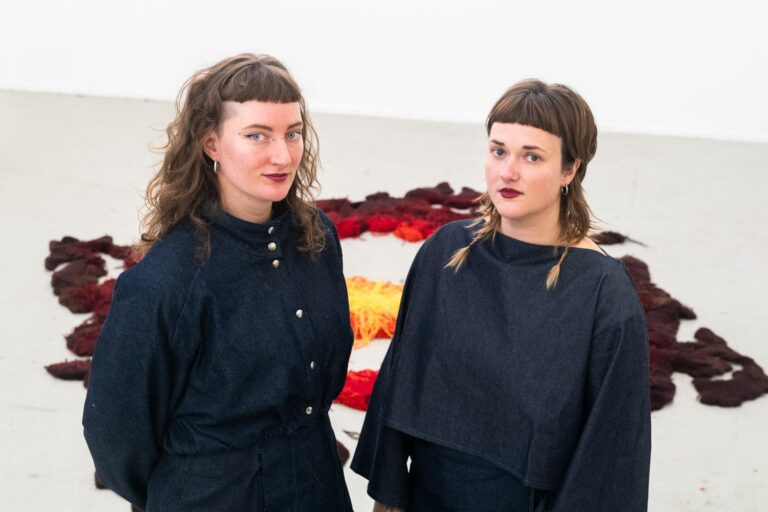
Het kunstenaarsduo ZOLT, gevormd door Susanne Luurs en Debora Westra, werkt sinds 2023 intensief samen binnen het ontwikkeltraject Artist in Space van De Noordenaars. Beiden zijn afkomstig uit het Groningse Hogeland en komen uit sterk verschillende artistieke achtergronden, maar ontdekten per toeval dat hun praktijken verrassend goed op elkaar aansluiten en zodoende ontstond ZOLT. In dit traject onderzoeken zij hoe een gezamenlijke beeldtaal kan ontstaan, hoe landschap, volksverhalen, feministische thema’s en lokale materialen samen een nieuwe vorm van samenwerken kunnen sturen, en hoe hun duo zich verder kan ontwikkelen tot een gezamenlijke artistieke praktijk.
The artist duo ZOLT, formed by Susanne Luurs and Debora Westra, have been working closely together since 2023 as part of the Artist in Space development programme by De Noordenaars. Both artists are originally from the Hogeland region of Groningen and come from very different artistic backgrounds, but they discovered by chance that their practices were surprisingly well suited to one another, which led to the formation of ZOLT. Within this programme, they are exploring how a shared visual language can emerge, how landscape, folk tales, feminist themes, and local materials can shape a new form of collaboration, and how their duo can further develop into a shared artistic practice.
Susanne (S): We noemen onszelf ZOLT, Gronings voor zout, omdat dat woord voor ons precies opsomt en verbeeldt waar wij vandaan komen: de kust, het water, de bodem en de verhalen die daar blijven rondzingen.
Debora (D): We zijn beiden opgegroeid in het Hogeland en merkten pas later in onze praktijk hoe sterk die Groningse grond ons werk vormt. Wat eerst iets vanzelfsprekends was, of iets waar je je als tiener juist van af wilde zetten, blijkt nu ineens de basis voor onze samenwerking.
S: Het traject Artist in Space van De Noordenaars geeft ons de ruimte om die verbinding open te trekken, te bevragen en nieuw werk te laten ontstaan dat echt uit deze bodem komt.
S: We komen uit totaal verschillende praktijken. Ik studeerde in 2021 af aan Minerva en mijn werk verhaalde toen al over de bodem, de kunstmatigheid van landschap, onze relatie met water, en hoe we als mens naast de natuur bestaan.
D: Ik studeerde oorspronkelijjk af in Illustratie en werkte jaren als freelance illustrator, vooral digitaal. Maar ik merkte dat ik de tactiliteit van mijn eerdere werk miste en daarom ben ik vervolgens begonnen te werken met wol en tuften, en zodoende vond ik een nieuwe weg richting textiel en fysiek werk.
S: Toen onze werken voor het eerst naast elkaar hingen bij de tentoonstelling Matriarchaat in Galerie Noord, met Debora’s kleurige figuratieve wandkleden en mijn abstracte performances met natuurlijke tinten, voelden we meteen dat er iets spannends tussen onze werken was.
D: Dat moment werd eigenlijk het beginpunt van ZOLT: twee praktijken die elkaar raken zonder op elkaar te lijken, en juist daardoor samen iets nieuws kunnen bouwen.
Susanne (S): We call ourselves ZOLT, which is Groningen dialect for salt, because for us the word captures and embodies exactly where we come from: the coast, the water, the soil, and the stories that continue to linger there.
Debora (D): We both grew up in the Hogeland region and only later, through our artistic practices, realised how strongly the Groningen landscape shapes our work. What initially felt like something self-evident, or something you might even want to distance yourself from as a teenager, now turns out to be the foundation of our collaboration.
S: The Artist in Space programme by De Noordenaars gives us the space to open up and question that connection, and to create new work that truly emerges from this soil.
S: We come from completely different artistic practices. I graduated from Minerva in 2021, and even then my work was already concerned with the soil, the artificiality of landscape, our relationship with water, and how we, as human beings, coexist alongside nature.
D: I originally graduated in Illustration and worked for years as a freelance illustrator, mainly digitally. But I realised that I missed the tactility of my earlier work, so I started working with wool and tufting. In doing so, I found a new path towards textiles and physical, material-based work.
S: When our work was first shown side by side in the exhibition Matriarchaat at Galerie Noord, with Debora’s colourful figurative wall hangings and my abstract performances in natural tones, we immediately felt that there was something exciting happening between our works.
D: That moment really became the starting point for ZOLT: two practices that touch without resembling one another, and that, precisely because of this, can build something new together.
D: Ik had als tiener een afkeer voor alles wat te dorps of te Gronings voelde, maar nu ben ik juist op een punt dat ik die verbondenheid met materiaal, landschap, plek en oorsprong heel bewust waardeer.
S: Voor mij was dat besef er al langer, maar nog niet in een gezamenlijke vorm. Toen jij bezig was met volksverhalen en ik met ecofeminisme en de relatie tussen vrouwelijk lichaam en landschap, begon het bij ons allebei te borrelen.
D: We zagen online een opkomst van heel traditionele, soms ronduit antifeministische ideeën onder jonge mannen. En tegelijkertijd zagen we hoe oude Groningse volksverhalen óók vol misogenie zitten.
S: je hebt bijvoorbeeld de zeewiefkes, de heksen, en alle eigenlijk andere eenzame vrouwen die schuld kregen van stormvloeden, mislukte oogsten of schipbreuk.
D: We dachten: hoe kunnen we die verhalen opnieuw lezen? Hoe kunnen we ze openbreken? Wat gebeurt er als we ze naast de huidige tijd leggen?
D: As a teenager, I had an aversion to anything that felt too rural or too typically Groningen, but now I have reached a point where I consciously value that connection to material, landscape, place, and origin.
S: For me, that awareness had been there for longer, but not yet in a shared form. When you were working with folk tales and I was exploring ecofeminism and the relationship between the female body and the landscape, something began to emerge for both of us.
D: We saw the rise online of very traditional, sometimes outright anti-feminist ideas among young men. At the same time, we noticed that old Groningen folk tales are also full of misogyny.
S: There are, for example, the zeewiefkes, the sea women, the witches, and all the other women who were essentially portrayed as lonely outsiders and blamed for storm surges, failed harvests, or shipwrecks.
D: We thought: how can we reread these stories? How can we break them open? What happens when we place them alongside the present day?
S: Om dit verder uit te diepen zijn we voor Artist in Space residenties gaan doen in het kustgebied: het Lage Noorden, de Bierumerschool en Vlieland. We wilden luisteren naar het landschap, het lezen zoals de Potawatomi plantendeskundige Robin Wall Kimmerer dat beschrijft: vertraagd, met wederkerigheid, met aandacht voor ritme en vorm.
D: Op de kwelders zagen we steeds de cirkel terugkeren. Vooral de dobben in Friesland, dat zijn ronde zoetwaterplekken die boeren groeven zodat het vee vers drinkwater had, trokken ons heel erg aan.
S: Die cirkel werd de vorm waarmee we begonnen: een openingsperformance met slip die we ritmisch in cirkels op elkaars hoofd smeerde voor een half uur lang.
D: Deze performance was voor ons een manier om toestemming te vragen aan het landschap voordat we verder gingen met onze praktijk. Het voelde misschien vreemd om ‘toestemming te vragen’, maar voor ons was het een manier om een bewuste houding te creëren om te voorkomen dat je het landschap zo maar voor lief neemt terwijl je wel al je werk erop baseert.
S: Door het ritueel te doen, voelden we echt: dit is de start, dit mag ontstaan, dit komt voort uit hier.
D: Daarna zijn we dieper de volksverhalen ingegaan en spraken we iemand die vertelde over moderne heksen die naar het gebied waren verhuisd vanwege de Zuidwalvulkaan, een vulkaan 2 kilometer onder de zee tussen Harlingen en Vlieland, die ze soms “de navel van Moeder Aarde” noemden.
S: Dit gegeven inspireerde de performance op Vlieland: een cirkel van vuur, gebaseerd op heksenrituelen waarin cirkels bescherming en energiebehoud betekenen.
D: We onderzochten hoe wij elkaar dragen, ook in de letterlijke zin: hoe onze lichamen bewegen wanneer we tillen, steunen, vasthouden en neerleggen.
S: Het voelde als een manier om onze voorzusters te eren én onze eigen samenwerking te begrijpen.
S: To explore this further, we undertook residencies in the coastal region as part of Artist in Space: at Het Lage Noorden, the Bierumer School, and on Vlieland. We wanted to listen to the landscape, to read it in the way Potawatomi botanist Robin Wall Kimmerer describes: slowly, with reciprocity, and with attention to rhythm and form.
D: On the salt marshes, we kept seeing the circle recurring. We were particularly drawn to the dobben in Friesland: circular freshwater pools dug by farmers to provide their livestock with fresh drinking water.
S: The circle became the form we began working with: an opening performance in which we rhythmically smeared slip in circles onto each other’s heads for half an hour.
D: For us, this performance was a way of asking the landscape for permission before moving forward with our practice. It may seem strange to ‘ask for permission’, but for us it was a way of consciously relating to the landscape, to avoid taking it for granted while basing our entire practice upon it.
S: By carrying out the ritual, we really felt: this is the beginning, this is allowed to emerge, this comes from here.
D: We then delved deeper into the folk tales and spoke to someone who told us about modern witches who had moved to the area because of the Zuidwal Volcano, a volcano located two kilometres beneath the sea between Harlingen and Vlieland, which they sometimes referred to as ‘the navel of Mother Earth’.
S: This inspired the performance on Vlieland: a circle of fire, based on witch rituals in which circles represent protection and the preservation of energy.
D: We explored how we carry one another, also in the literal sense: how our bodies move when we lift, support, hold, and put each other down.
S: It felt like a way of honouring our foremothers while also coming to understand our own collaboration.
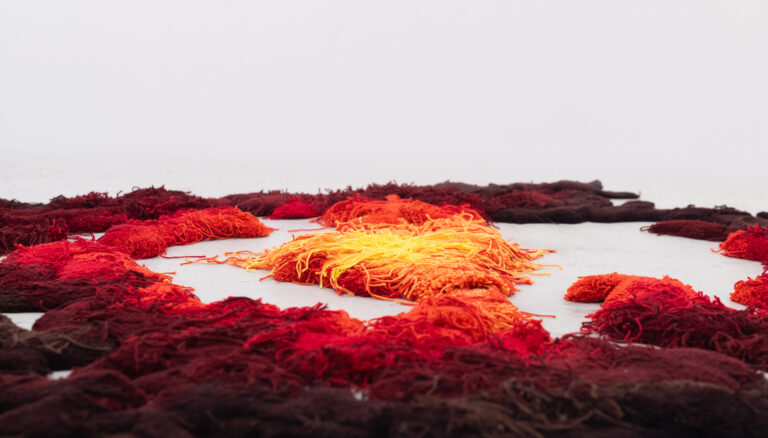
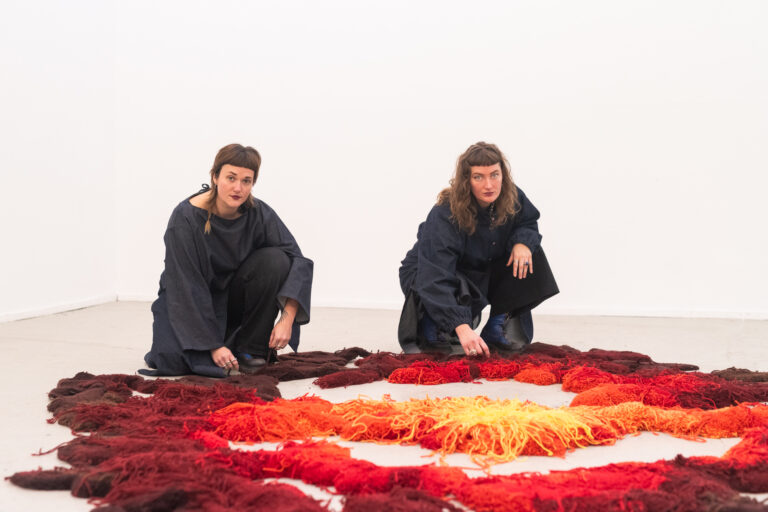
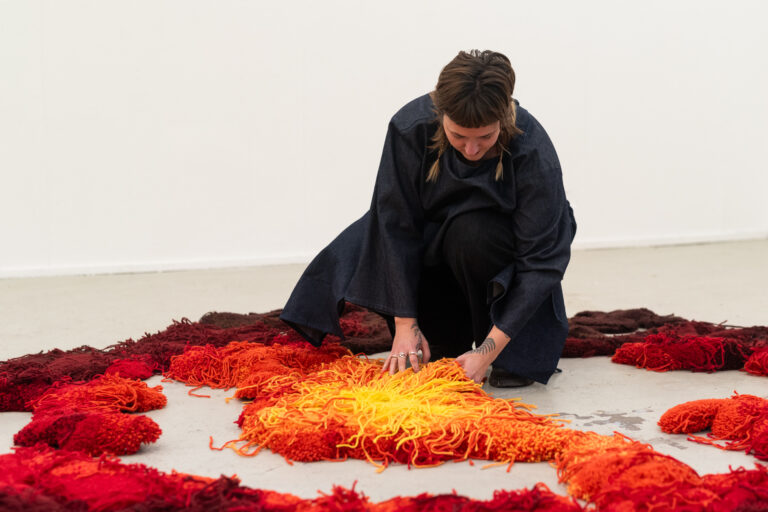
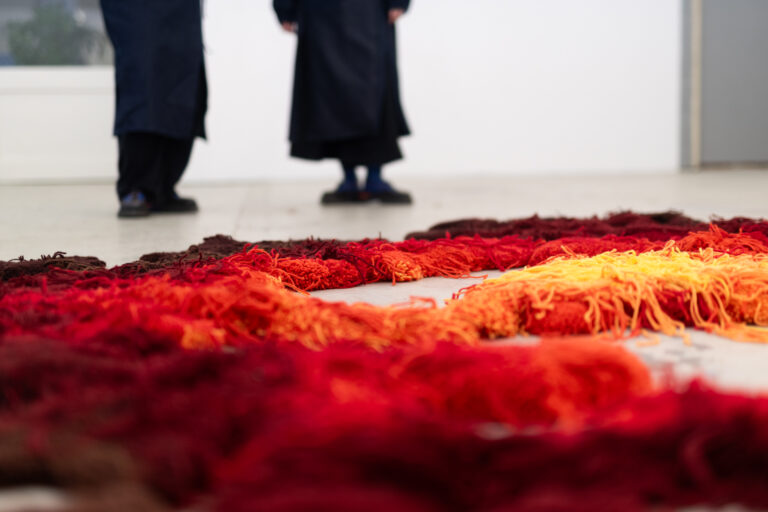
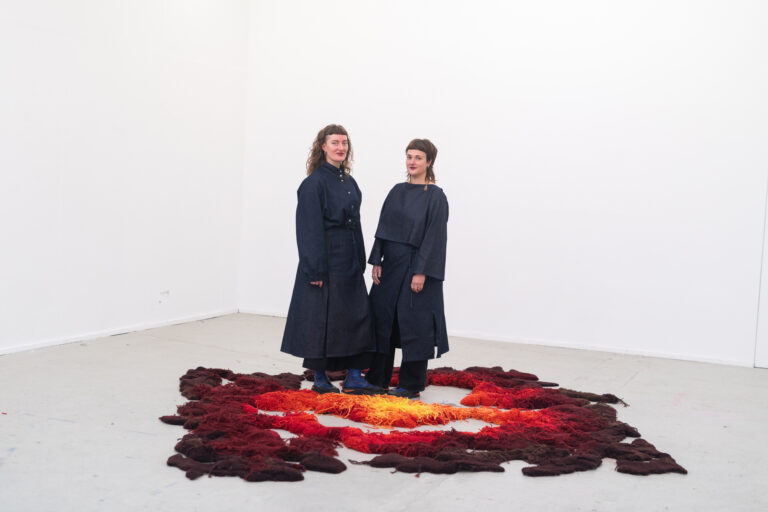
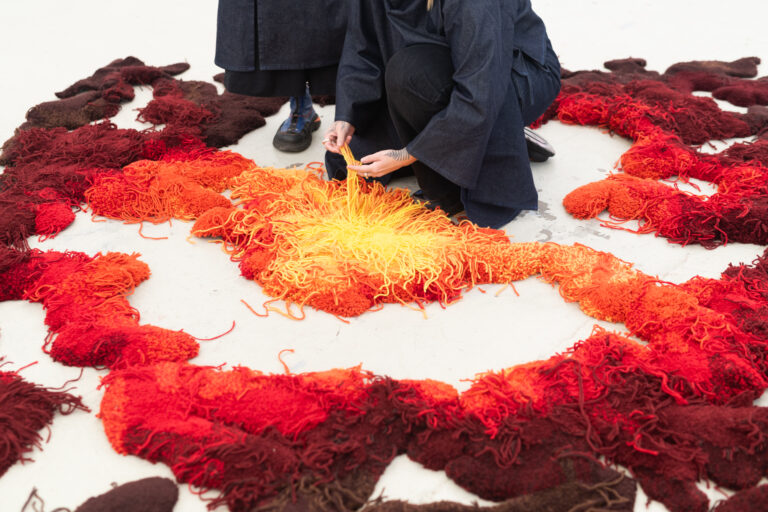
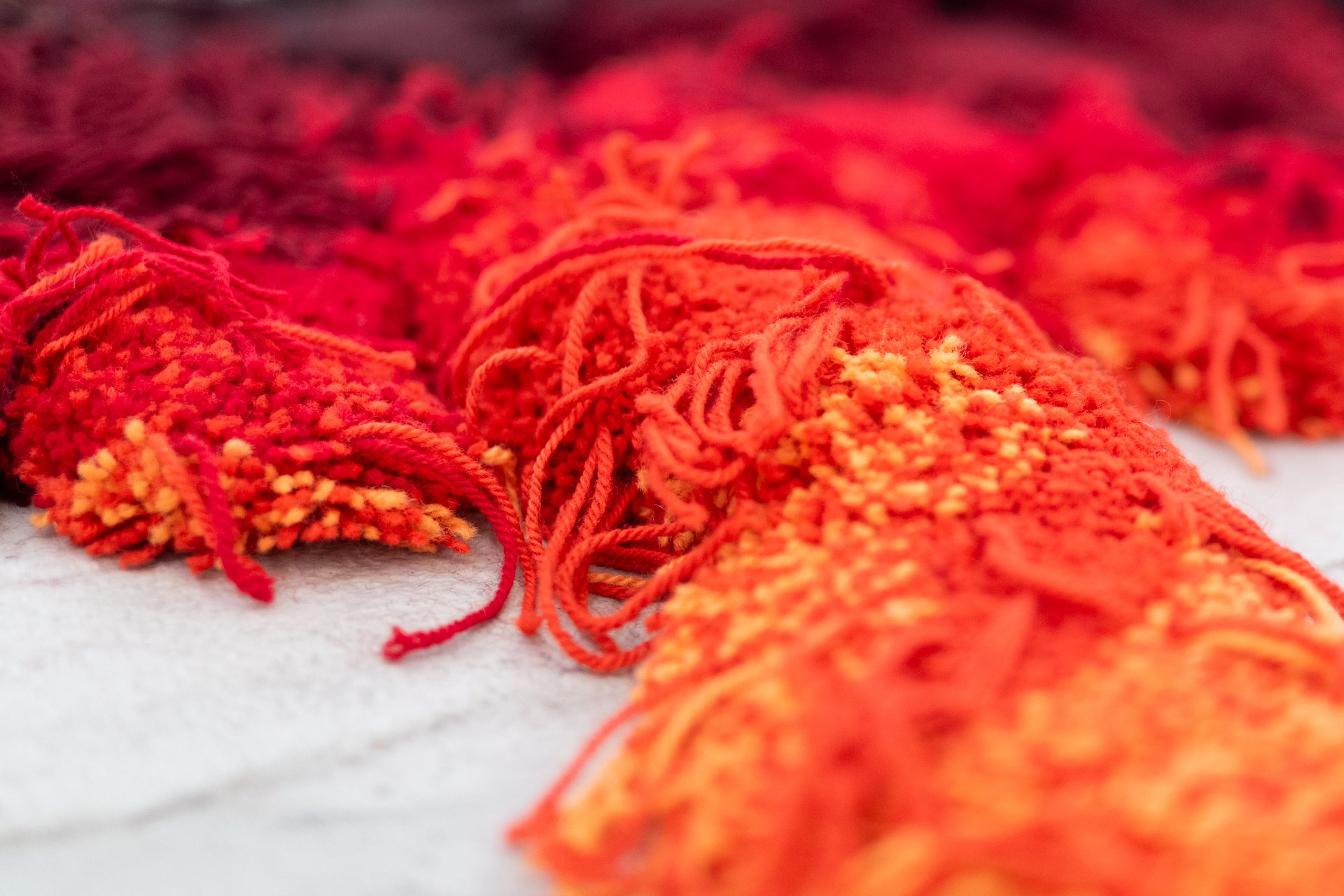
D: Uit dat onderzoek ontstond het lavastroom-kleed dat we samen hebben gemaakt: een vorm waarin we beiden kunnen liggen, zacht én zwaar tegelijk, alsof het verhaal van de vulkaan en de vrouwen die vervolgd zijn samenkomt in textiel.
S: Het was ons eerste gezamenlijke object waar we in performden. Alles is momenteel nog in een prille fase en een beetje aftastend, kwetsbaar, nieuw, maar dat maakt het juist betekenisvol.
D: Parallel daaraan geven we de zogenaamde off course, oftewel de vakcursus Salty Folklore op Academie Minerva, waarin we studenten meenemen naar de kwelder, naar de dijk, naar wolspinnerij Wad’n Wolletje en Klaei BV die overtollige slib omzet tot bruikbare producten. Dit geeft de studenten meer inzicht in materiaal en lokaliteit, waardoor dingen geen concepten meer blijven, maar tastbaar en gegrond worden.
S: En in samenwerking met het Groninger Museum en de Bierumer School werkten we met kinderen aan het verhaal van het Zee Wiefke, die tijdens de Kerstvloed van 1717 in een kolk het ‘Aeilsgat’ terechtkwam en er niet meer uit kon komen. Nu zwemt ze daar al drie eeuwen boos rondjes. Er zijn vele varianten op de verhalen, maar altijd komt het neer op het feit dat de vrouwen de schuld van schipbreuken of andere rampen.
D: Een meisje die meedeed aan het project zei direct: “Ze is boos omdat ze is opgesloten.” Dat raakte de kern; het onrecht dat vrouwen door de geschiedenis heen wordt aangedaan. Dus daarom herschreven we het verhaal: niet langer een gevaarlijke verleidster, maar iemand die haar vrijheid terug wil.
D: This research led to the lava-flow rug that we made together: a form in which both of us can lie, soft and heavy at the same time, as if the story of the volcano and the women who were persecuted come together in the textile.
S: It was the first object we created together that we also performed with. Everything is still in a very early and exploratory phase, somewhat tentative, vulnerable, and new, but that is precisely what makes it meaningful.
D: Alongside this, we teach the so-called Off Course, the Salty Folklore professional elective at Academie Minerva, where we take students to the salt marshes, the dike, the wool-spinning mill Wad’n Wolletje, and Klaei BV, where surplus sediment is transformed into usable products. This gives students a deeper understanding of material and locality, so that things no longer remain mere concepts, but become tangible and grounded.
S: And in collaboration with the Groninger Museum and the Bierumer School, we worked with children on the story of the Zee Wiefke, who, during the Christmas Flood of 1717, ended up in a pool called the ‘Aeilsgat’ and could no longer escape. Now she has been angrily swimming in circles there for three centuries. There are many variations of the story, but they always come down to the same thing: women are blamed for shipwrecks and other disasters.
D: One of the girls who took part in the project immediately said: ‘She’s angry because she’s trapped.’ That struck at the heart of the story: the injustice women have experienced throughout history. So we rewrote the story: no longer a dangerous seductress, but someone who wants her freedom back.
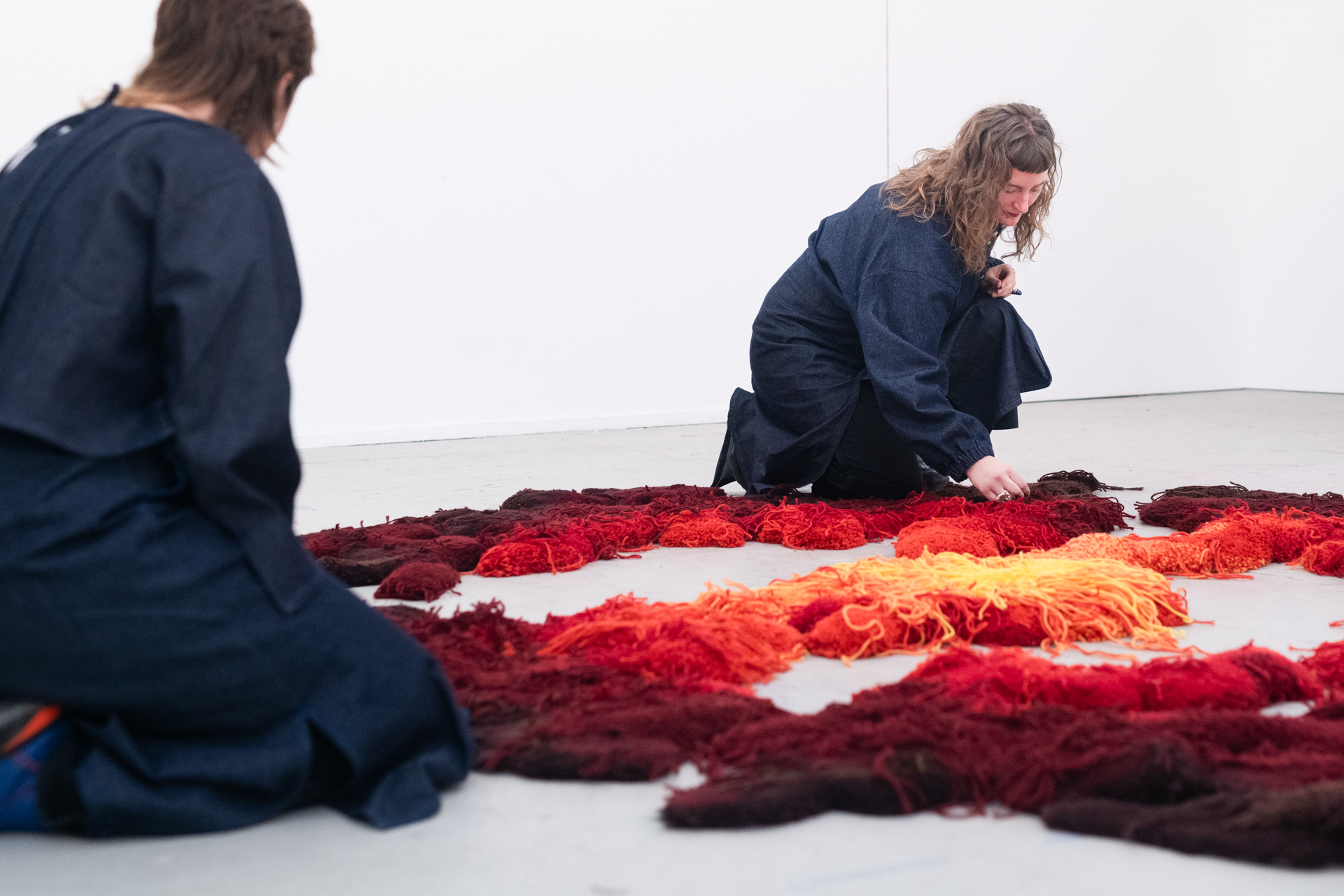
D: Een deel van ons onderzoek binnen het traject is hoe we onszelf als duo een vorm aanmeten binnen ZOLT. Dit is niet alleen inhoudelijk, maar ook hoe we ons fysiek als duo presenteren: met een deel van het stipendium hebben we Marloes Hoogeveen de opdracht kunnen geven om voor ons kleding te maken met lokaal gerecyclede denim, wat ervoor zorgt dat zelfs onze aanwezigheid verbonden is met de plek.
S: Voor het laatste gedeelte van het traject zijn we op zoek naar de juiste plek voor het maken van een installatie. We dromen van een installatie die alles samen brengt en waarin we tevens alle onderdelen afzonderlijk van elkaar kunnen bekijken: een kunstmatig landschap met video, textiel, klei, slib, geluid en hervertelde verhalen.
D: Maar niets staat al vast.
S: Dat is juist de kracht van deze fase.
D: We ontdekken.
S: We luisteren.
D: Wat we nu bouwen is nog niet af—en dat hoeft ook niet.
S: De komende maanden werken we verder aan het vormgeven van een installatie waarin al deze lijnen samenkomen.
D: Met elke residentie, elke performance en elk gesprek groeit ZOLT verder als duo.
S: Het traject geeft ons de ruimte om niet alleen werk te maken, maar een fundament te leggen voor een praktijk die we samen willen blijven uitbouwen.
D: Dit is pas het begin.
D: Part of our research within the programme is about finding a form for ourselves as a duo within ZOLT. This is not only about content, but also about how we physically present ourselves as a duo. With part of the stipend, we were able to commission Marloes Hoogeveen to create clothing for us using locally recycled denim, ensuring that even our physical presence is connected to the place.
S: For the final part of the programme, we are looking for the right location to create an installation. We dream of an installation that brings everything together, while also allowing us to experience all the individual elements separately: an artificial landscape made of video, textiles, clay, sediment, sound, and retold stories.
D: But nothing has been decided yet.
S: That is precisely the strength of this phase.
D: We discover.
S: We listen.
D: What we are building now is not finished yet—and it doesn’t have to be.
S: Over the coming months, we will continue shaping an installation in which all these threads come together.
D: With every residency, every performance, and every conversation, ZOLT continues to grow as a duo.
S: The programme gives us the space not only to create work, but also to lay the foundations for a practice that we want to continue developing together.
D: This is only the beginning.
✍️ Tekst: Dinnis van Dijken
📸 Foto’s: Sander van der Bij
✍️ Text: Dinnis van Dijken
📸 Photos: Sander van der Bij