Interview with Ietje Meerman about her Artist in Space traject (2025)
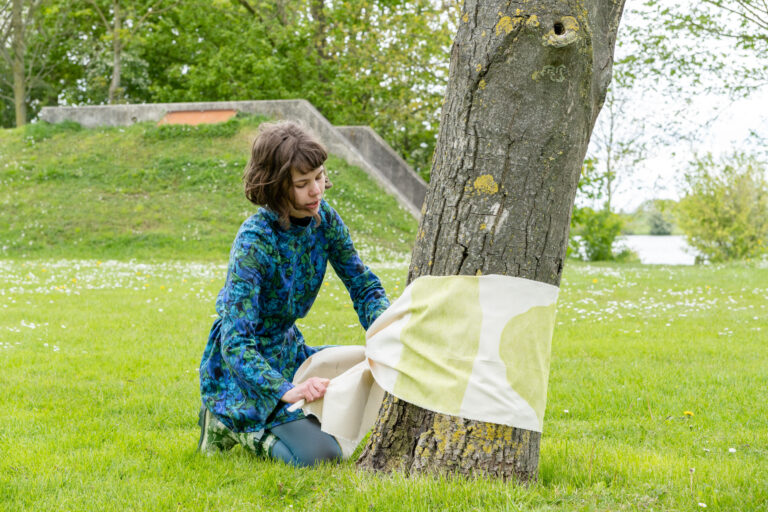
Ietje Meerman (1999, Oirschot) heeft sinds haar recente verhuizing naar het noorden van Nederland haar kunstenaarschap een nieuwe richting gegeven. Zij neemt deel aan het Artist in Space-traject van de Noordenaars, wat haar de mogelijkheid biedt haar langlopende fascinatie voor de relatie tussen mens en dier te verbinden met het Noord-Nederlandse landschap. Het resultaat is een filmisch project waarin haar alter ego, Graaf Mol, de hoofdrol speelt als verteller en gids door een ecocentrische lezing van de omgeving.
Since her recent move to the north of the Netherlands, Ietje Meerman (1999, Oirschot) has taken her artistic practice in a new direction. She is participating in De Noordenaars’ Artist in Space programme, which gives her the opportunity to connect her long-standing fascination with the relationship between humans and animals to the landscape of the northern Netherlands. The result is a cinematic project in which her alter ego, Graaf Mol (Count Mole), takes centre stage as narrator and guide through an ecocentric reading of the environment.
“Ik ben in 1999 geboren in Oirschot en heb daar mijn hele jeugd gewoond. Na de middelbare school twijfelde ik tussen Autonoom Beeldende Kunst en andere studies zoals wiskunde of biologie. Ik wist al dat het kunstenaarschap hard werken was, want mijn moeder is ook kunstenaar. Toch was mijn eerste droom om acteur te worden. In mijn eerste tussenjaar volgde ik de vooropleiding theater en deed ik audities. Gaandeweg merkte ik dat alleen spelen niet genoeg was; ik wilde ook zelf iets maken en niet uitsluitend meegaan in de denkwereld van anderen. Zo kwam ik uiteindelijk bij ArtEZ in Arnhem terecht. Daar viel alles op zijn plek en bleek de kunstacademie de meest passende keuze voor mij. Het maken wordt er veel sterker aangesproken dan wanneer je acteert. De beeldende aspecten staan centraal en komen beter tot hun recht dan wanneer je alleen je lichaam en stem inzet. Ik wil vrijheid hebben in de breedste zin van het creëren. Nu, twee jaar na mijn afstuderen, ben ik nog steeds zoekende naar verdieping, maar begint langzaam duidelijk te worden wat mijn behoefte is.
Aan het begin van mijn studie lag mijn focus vooral op performance. Gaandeweg, toen ik me steeds meer verdiepte in de relatie tussen mens en dier, ben ik veel met tekst, tekeningen en video bezig geweest. Binnen video kon ik mijn liefde voor performance kwijt en heb ik die ook weer kunnen integreren in mijn afstuderen. Zo is het een zoektocht geweest naar hoe ik mijn fascinatie voor acteren en performance kon samenbrengen met mijn interesse in dier-mensrelaties. Na mijn afstuderen is performance een blijvend onderdeel van mijn praktijk geworden en komt het binnen de film ook weer tot uiting.
“I was born in Oirschot in 1999 and lived there throughout my childhood. After secondary school, I was torn between studying Fine Art and other fields such as mathematics or biology. I already knew that being an artist was hard work, because my mother is also an artist. Still, my first dream was to become an actor. During my first gap year, I attended a theatre preparatory programme and auditioned for acting roles. Gradually, I realised that performing alone was not enough; I also wanted to create something myself rather than simply enter into other people’s ways of thinking. Eventually, this led me to ArtEZ in Arnhem. There, everything fell into place, and I discovered that art school was the right choice for me. It places much more emphasis on making than acting does. The visual aspects are central and come into their own more fully than when you work solely with your body and voice. I want to have freedom in the broadest possible sense of creating. Now, two years after graduating, I am still searching for greater depth, but I am slowly beginning to understand what I need.
At the beginning of my studies, my focus was primarily on performance. As I gradually delved deeper into the relationship between humans and animals, I began working extensively with text, drawings, and video. Through video, I was able to retain my love of performance and integrate it into my graduation project. In this way, my practice became a search for how to bring together my fascination with acting and performance and my interest in human-animal relationships. Since graduating, performance has remained a lasting part of my practice and continues to find expression in my films.
Na mijn afstuderen combineerde ik mijn kunstpraktijk met een baan in een dierentuin, wat me in staat stelde om achter de schermen mee te kijken en dieren te observeren. Daarnaast had ik een aantal kunstprojecten lopen, deed ik twee residenties en richtte ik in 2022 samen met mijn moeder een collectief op. We delen dezelfde interesses, maar hebben verschillende werkwijzen; samen durven we meer te maken. Ik werk grotendeels autonoom, maar het collectief blijft een belangrijk, zij het sporadisch, onderdeel van mijn praktijk. Ondanks de afstand proberen we ook nu te onderzoeken hoe we binnen individuele projecten mogelijkheden kunnen blijven vinden om samen te werken.
Samen met mijn vriend verhuisde ik naar het noorden van Nederland. Het was een mooie kans om te onderzoeken hoe mijn praktijk in deze nieuwe context zou passen en welke mogelijkheden hier voor mij lagen. Binnen het Artist in Space-traject doe ik onderzoek naar het Noord-Nederlandse landschap, met de mol als dier en verteller. Het werk verkent de driehoekige relatie tussen mijzelf, de mol en het landschap. Het is voor mij een manier om het landschap beter te begrijpen, of beter te leren luisteren.
After graduating, I combined my artistic practice with a job at a zoo, which allowed me to observe animals and see what happens behind the scenes. At the same time, I was working on several art projects, completed two residencies, and in 2022 founded a collective together with my mother. We share the same interests but have different ways of working; together, we dare to make more. I work largely independently, but the collective remains an important, albeit sporadic, part of my practice. Despite the distance between us, we continue to explore how we can find opportunities to collaborate within our individual projects.
My boyfriend and I moved to the north of the Netherlands. It was a wonderful opportunity to explore how my practice might fit into this new context and what possibilities I could find here. As part of the Artist in Space programme, I am researching the landscape of the northern Netherlands, with the mole as both animal and narrator. The work explores the triangular relationship between myself, the mole, and the landscape. For me, it is a way of understanding the landscape better, or learning how to listen to it more closely.
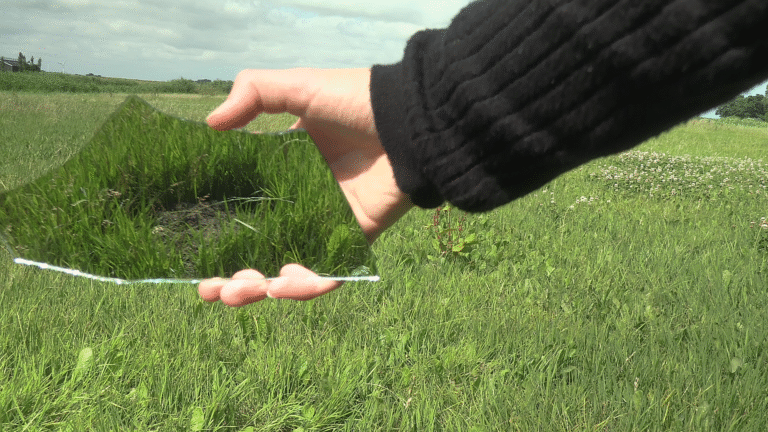
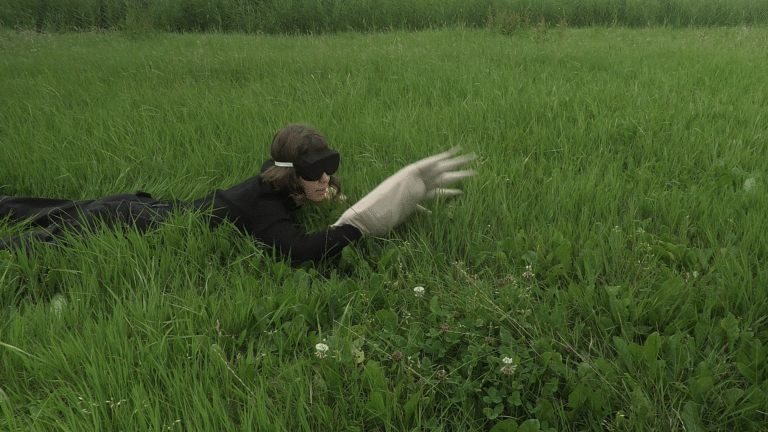
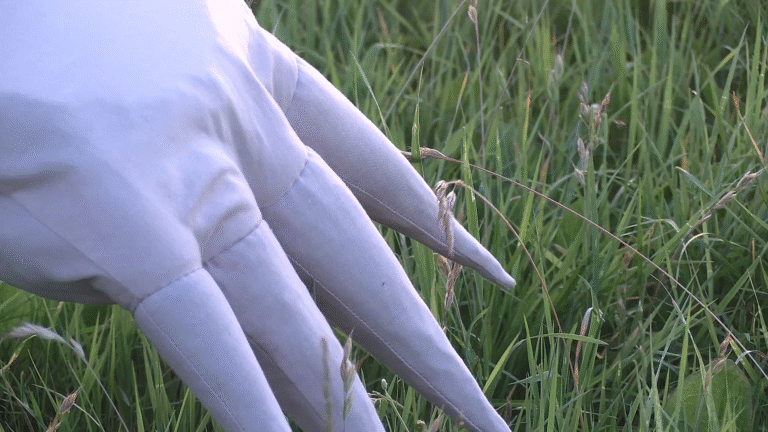
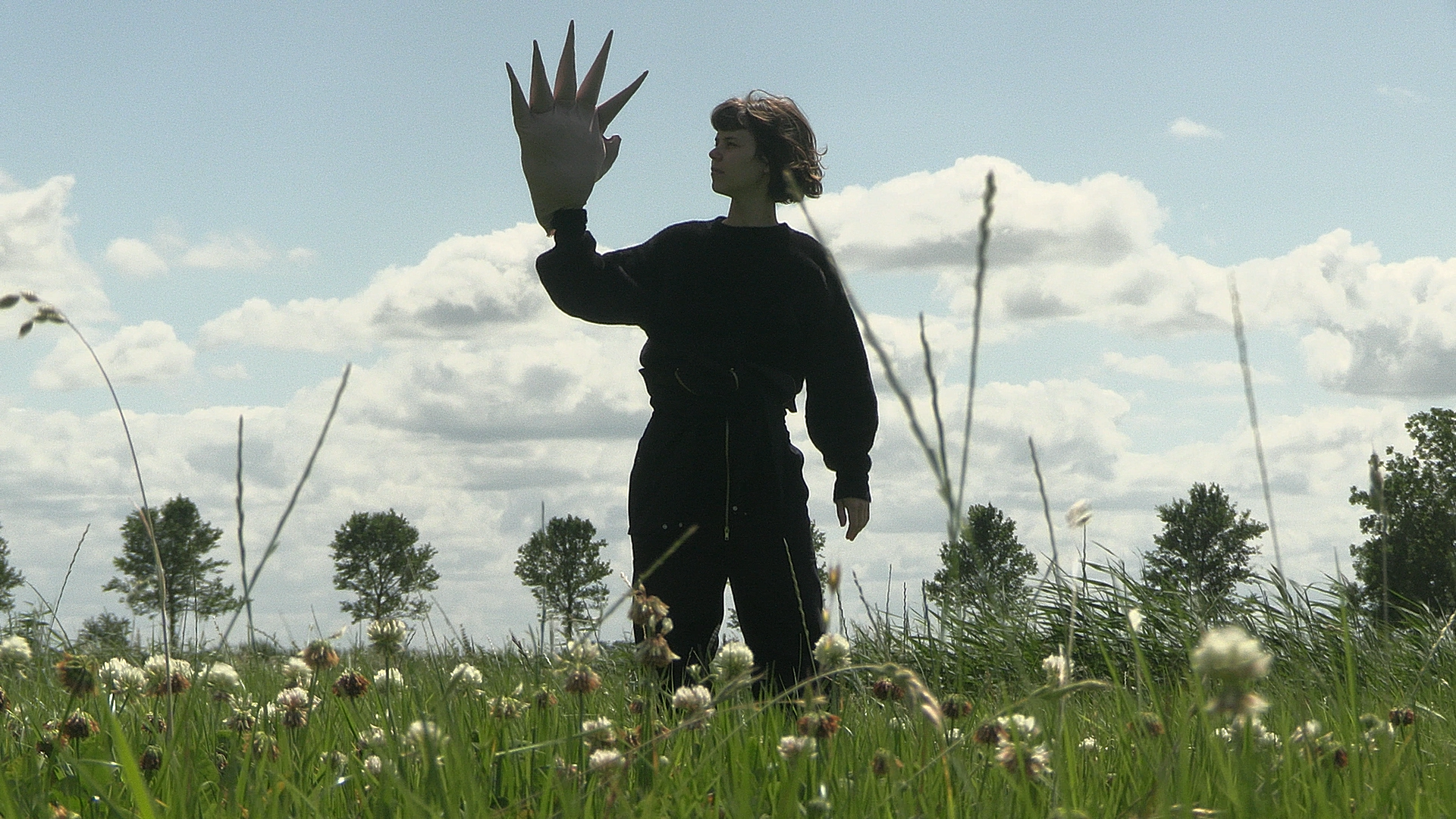
Ik heb een alter ego gecreëerd: Graaf Mol, een schemerwezen, een hybride levensvorm. Samen met mijn moeder werk ik aan een kostuum dat ervoor zorgt dat ik, net als een mol, niet veel zie, maar wel kan spreken. Ik loop op twee benen, maar heb mollenpoten. De mol kwam centraal te staan door de wierden en molshopen die ik in het noordelijke landschap tegenkwam. Wierden zijn immers eveneens opgeworpen aarde, vergelijkbaar met een molshoop die bestaat uit de ‘rotzooi’ uit de tunnel van een mol. Als een mol een wierde zou zien, zou die dat anders interpreteren dan wij. Met de verhalen die ik probeer te vertellen wil ik onze vastgeroeste, antropocentrische denkwijzen doorbreken en stilstaan bij het feit dat andere wezens het landschap anders ervaren. Als mens kunnen we meer leren om vanuit het ecosysteem te denken. Het is voor mij belangrijk dieren als medebewoners te zien en antropocentrische indelingen te vermijden.
Het Artist in Space-traject heeft ervoor gezorgd dat ik het landschap actief in mijn onderzoek heb betrokken. Het Noord-Nederlandse landschap was nieuw voor me en doet iets met me in relatie tot historie, geografie en gevoel. Dit onderzoek is echt een ontmoeting tussen mij en het landschap. Ik ben inmiddels ver gevorderd; uiteindelijk wordt het een filmisch onderzoek bestaande uit vijf delen. Ik heb veel gefilmd, onder andere bij Grasland in Ezinge. Voor het eerste deel ben ik nu de laatste opnamen aan het maken, ben ik begonnen met editen en ga ik binnenkort samen met mijn broertje muziek en geluid produceren.
I created an alter ego: Graaf Mol, a twilight creature, a hybrid life form. Together with my mother, I am working on a costume that allows me, like a mole, to see very little, while still being able to speak. I walk on two legs, but have mole paws. The mole became central to my work because of the wierden and molehills I encountered in the northern landscape. Wierden are, after all, also mounds of earth, comparable to a molehill made up of the ‘debris’ from a mole’s tunnel. If a mole were to see a wierde, it would interpret it differently from the way we do. Through the stories I try to tell, I want to disrupt our fixed, anthropocentric ways of thinking and reflect on the fact that other beings experience the landscape differently. As humans, we can learn to think more from the perspective of the ecosystem. It is important to me to see animals as fellow inhabitants and to avoid anthropocentric classifications.
The Artist in Space trajectory has encouraged me to actively incorporate the landscape into my research. The landscape of the northern Netherlands was new to me, and it affects me in relation to history, geography, and emotion. This research is truly an encounter between myself and the landscape. I have now progressed quite far; ultimately, it will become a five-part cinematic exploration. I have filmed extensively, including at Grasland in Ezinge. I am now making the final recordings for the first part, have begun editing, and will soon be producing music and sound together with my younger brother.
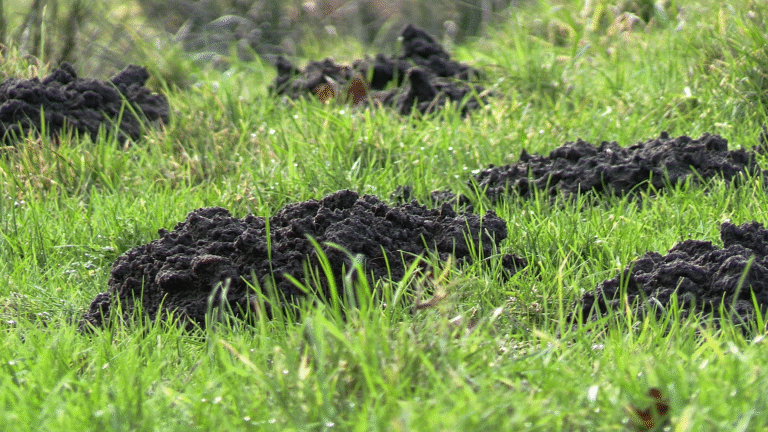
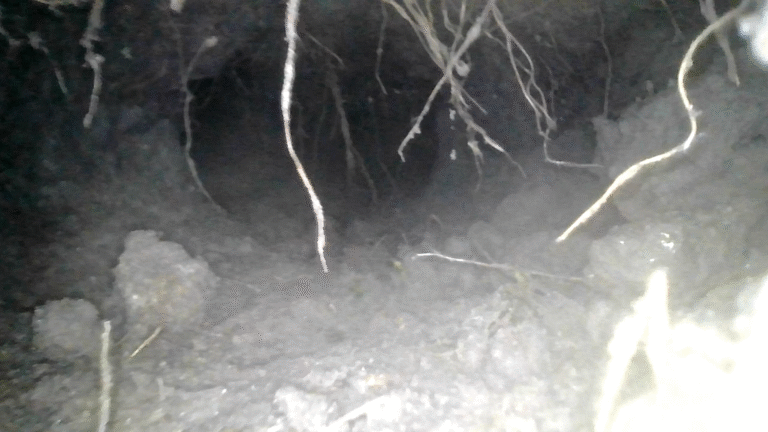
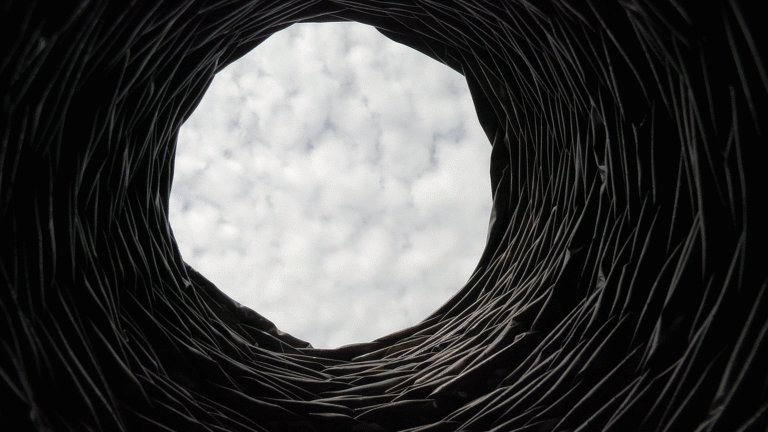
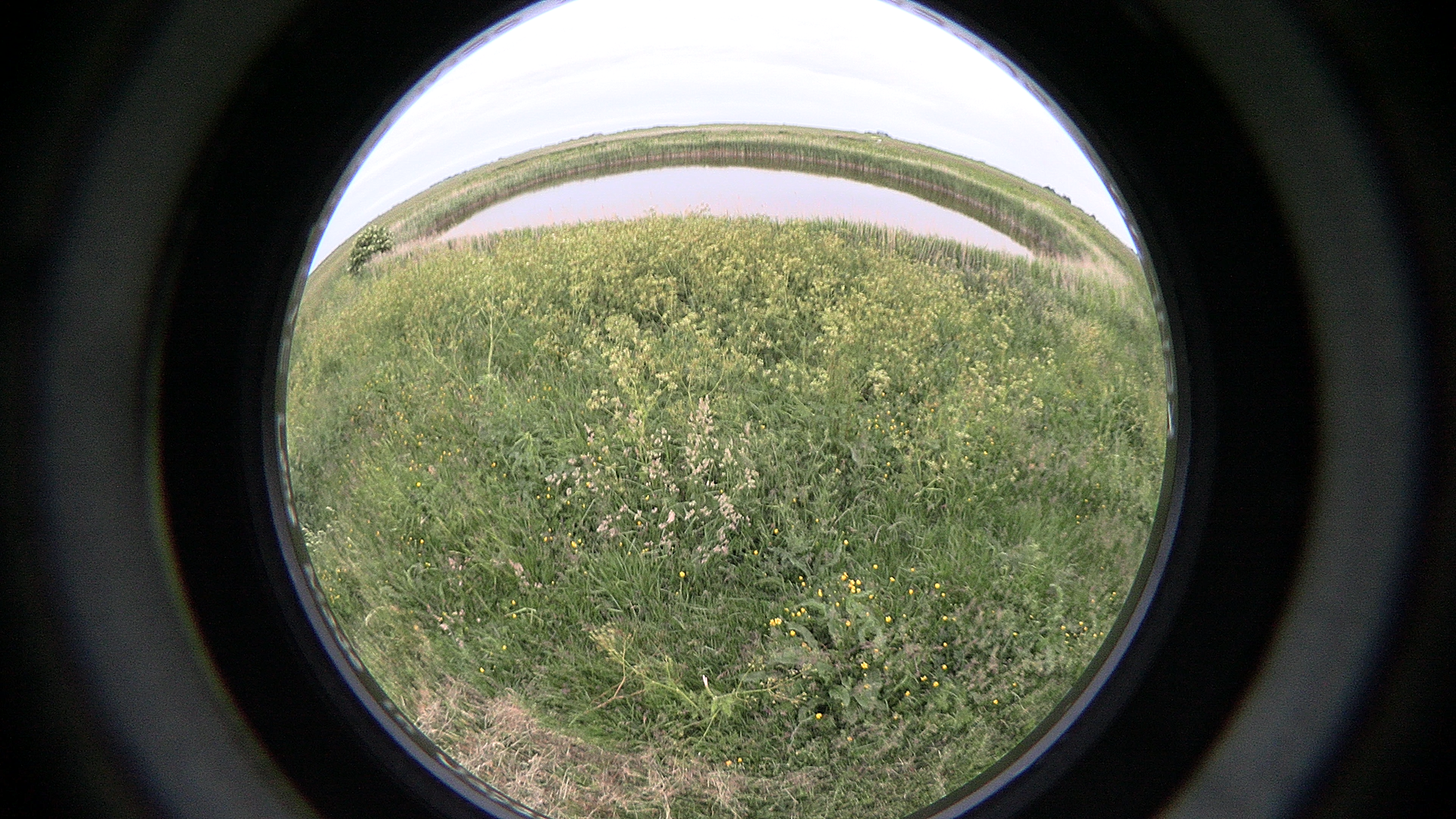
Het eerste deel gaat over de opgeduwde aarde en de confrontatie met de rol van de mol. Het is een verhalende film, waarin ik het landschap probeer te benaderen op een andere, meer zintuiglijke manier. Een van de dingen die ik heb gedaan is met een kleine inspectiecamera beelden maken van de mollengangen; ze zijn verrassend complex, vol wortels en T-splitsingen. De ondergrondse beelden probeer ik te vertalen naar een zintuiglijke, begrijpelijke benadering van het perspectief van de mol. Ik wil recht doen aan het dier, maar tegelijk blijft het een experimentele verbeelding: mijn perspectief. Via Graaf Mol probeer ik deze twee perspectieven met elkaar te vermengen en een nieuwe ervaring te creëren.
Binnen het traject wil ik in ieder geval het eerste deel afronden. De volgende delen zullen elk meer associatief ingaan op het waterlandschap, vogels, licht en seizoenen. In de maanden mei en juni heb ik een werkperiode bij Bierumer School, waarna ik het traject afsluit met een presentatie daar in de maand juli. Ik onderzoek nog hoe ik daarin de landschappelijkheid voelbaar kan maken, bijvoorbeeld door een grote molshoop te bouwen waarin de toeschouwer zich kan onderdompelen en zo wordt uitgenodigd het perspectief van de mol aan te nemen.
The first part focuses on the earth that has been pushed up and the confrontation with the role of the mole. It is a narrative film in which I try to approach the landscape in a different, more sensory way. One of the things I have done is use a small inspection camera to film the mole tunnels; they are surprisingly complex, filled with roots and T-junctions. I am trying to translate these underground images into a sensory, accessible approach to the mole’s perspective. I want to do justice to the animal, while at the same time acknowledging that this remains an experimental interpretation: my perspective. Through Graaf Mol, I try to blend these two perspectives and create a new experience.
Within the trajectory, I want to complete at least the first part. The subsequent parts will each explore, in a more associative way, the watery landscape, birds, light, and the seasons. In May and June, I will have a working period at the Bierumer School, after which I will conclude the trajectory with a presentation there in July. I am still researching how to make the landscape tangible within this presentation, for example by building a large molehill in which visitors can immerse themselves, inviting them to adopt the mole’s perspective.
Koos Buist, die zich in zijn praktijk op de verbinding tussen mens en lokale natuur richt, heeft me geholpen met de verhaallijn en praktische aspecten zoals het gebruik van camera’s. De begeleiding van het traject komt verder van Ron en Marie-Jeanne, de eigenaren van projectruimte SIGN in Groningen. Zij zijn kritisch, maar ook open en stimulerend richting experiment, waarbij het eindresultaat niet te zwaar hoeft te wegen. Ook bij het Lage Noorden heb ik begeleiding gehad. Ik houd van leren, en binnen het kunstenaarschap, nu met de tijd en ruimte die Artist in Space mij biedt, word ik daarin ruimschoots voorzien. Dit stipendium kwam op mijn pad toen ik onzeker en zoekende was in het Noorden. Het gaf me de kans mij verder te ontwikkelen en te experimenteren met film, landschap en mijn thematiek. Het is eigenlijk een groot cadeau voor mij als kunstenaar.”
Koos Buist, whose practice focuses on the connection between humans and local nature, has helped me with the storyline and practical aspects such as working with cameras. Further guidance throughout the trajectory comes from Ron and Marie-Jeanne, the owners of the project space SIGN in Groningen. They are critical, but also open to and encouraging of experimentation, with the understanding that the final result does not have to carry too much weight. I have also received guidance at Het Lage Noorden. I love learning, and within my artistic practice, with the time and space that Artist in Space provides me, I am given ample opportunity to do so. This grant came my way at a time when I was uncertain and searching for my place in the north. It gave me the opportunity to develop further and experiment with film, landscape, and my thematic interests. In many ways, it has been a great gift to me as an artist.”
✍️ Tekst: Dinnis van Dijken
📸 Foto’s: Koen Kievits + stills van onderzoek naar de taal van het landschap via de mol (2025-2026)
✍️ Text: Dinnis van Dijken
📸 Photos: Koen Kievits + stills from research into the language of the landscape through the mole (2025–2026)